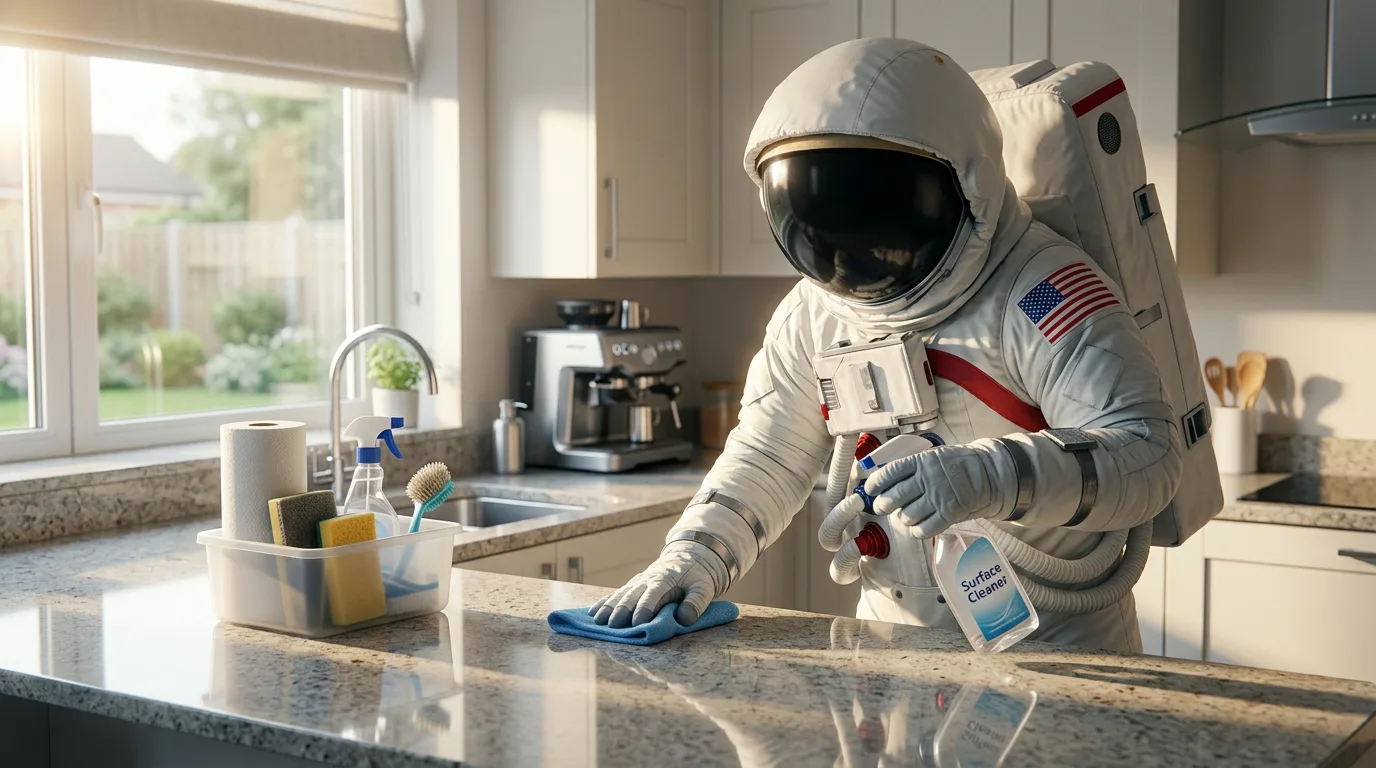
Cleaning Service Marketing That Builds Recurring Routes, Not One-Time Jobs
The cleaning business that wins isn’t the one with the most one-off bookings. It’s the one that turns a paid click into a recurring client whose lifetime value dwarfs what that click cost. We build the search, booking, and reputation presence that fills your route, not just your calendar this week.
Residential cleaning is a recurring-revenue business that most marketing treats like a one-time-job business. The economics reward retention, the demand is local and mobile-first, and the conversion happens fast or not at all. You win by acquiring the right repeat client and keeping the route full, not by chasing the cheapest single booking.
A homeowner who wants a clean house is not researching for weeks. They search “cleaning services near me,” read a few reviews, and book the provider that looks credible and responds fast, often from their phone before they ever speak to anyone. The whole decision can happen in one sitting, and most of it happens on Google and on your booking page, not on a sales call.
That is why a generic “get more leads” approach underperforms for cleaning. A one-time deep clean and a weekly recurring client cost the same to acquire but are worth very different amounts over a year, so the lever is converting paid demand into a route, not buying another disconnected job. We build around the exact moments that decide it: the local search, the reviews, the mobile booking, and the response. Every claim on this page is backed by a real source, listed at the bottom.
The case for doing this differently is not our opinion. It is what the data says, every figure sourced below.
The money is in the route, not the one-off job.
Residential cleaning runs on repeat revenue. About 41% of US households now use recurring cleaning services, and for cleaning businesses 64% of leads come from repeat customers. The recurring client is the asset; the one-time job is just the audition. A weekly or biweekly route is predictable, schedulable, and compounding, which is exactly what a one-off deep clean is not.
This reframes what marketing is for. The goal is not to generate the most bookings this month, it is to acquire clients who stay on the route, because a single retained client is worth a year of revenue while a one-time job is worth one visit. We measure and optimize toward recurring conversions and retained clients, not raw lead count, because that is where the business is built.
64% of cleaning leads come from repeat customers. The route is the asset; the one-time job is just the audition.
Where the leads really come from
You pay the same to win a click whether the job recurs or not.
The demand is local and it costs real money to buy. In paid search, cleaning and maid services run about $8.50 per click and roughly $47 per lead. You pay that same lead cost whether the booking turns into a single visit or a client who stays on your route for a year, which is the whole reason the conversion matters more than the click.
When every lead costs the same, the difference between a profitable program and a treadmill is what happens after the click: whether the one-time mover or the spring-clean shopper becomes a standing biweekly appointment. Cleaning does convert well when the path is right (the category posts one of the higher paid-search conversion rates in home services, around 18%), so we point the budget and the funnel at the queries and conversions that build a route, spreading the cost of acquisition across a year of visits instead of a single one. Whether that budget belongs in paid search or in organic at all is its own decision.
What a cleaning lead costs to buy
You pay the same to win a lead whether the booking is one-time or recurring, so the conversion into a route is the lever.
Source: LocaliQ, Home Services Search Advertising Benchmarks (2025)The booking happens on a phone, so the phone path has to work.
Cleaning is now a mobile-first purchase. Roughly 62% of cleaning service bookings are made through mobile apps and online platforms, which means the decision and the conversion both happen on a small screen, often outside business hours. A booking flow that demands a phone call during the day, or a site that is slow and clumsy on mobile, quietly loses the client to whoever made it easy.
Speed compounds the effect. A web lead contacted within 5 minutes rather than 30 is 21 times more likely to qualify and 100 times more likely to be reached, a finding drawn from more than 15,000 leads and over 100,000 call attempts, not a small survey. For a category where most bookings start on a phone after hours, the program has to pair a fast mobile booking path with immediate follow-up, because the lead you already paid for is the cheapest client you will ever sign.
The booking moves to mobile
Reviews are the proof a stranger uses to let you into their home.
A homeowner is handing a stranger the keys to their house, so the review profile is the trust. Only 4% of consumers say they never read reviews, which means your rating and review volume are working on almost every prospect before you ever speak to them. In a fragmented field of independent local operators competing block by block, your Google rating is what separates you from the company two listings down.
Reviews are also a moving target, not a one-time push. Whitespark’s Darren Shaw puts review recency in his top five local ranking factors for 2025, which means a steady, recent flow of reviews keeps you both visible in the map and credible to the buyer. We treat reviews as an owned asset with an ethical engine for earning them on every completed job, so your rating and recency keep pace with the route you are trying to fill.
Only 4% of consumers never read reviews. For almost every cleaning prospect, your rating speaks before you do.
Reviews reach almost every prospect
Reviews are where the trust is won, and review recency is a top-five local ranking factor for 2025.
Source: BrightLocal Local Consumer Review Survey 2025Spring is when you acquire the route you keep all year.
Cleaning demand is not flat. 82% of Americans say their house needs a spring cleaning, and 59% of spring cleaners would rather hire a professional to get it all done, which concentrates a wave of willing-to-outsource buyers into roughly the January-to-April window. That spike is the single best acquisition moment of the year, and it is also when your competitors are bidding hardest for the same searches.
The mistake is treating the spring rush as a volume goal in itself. The win is using that window to acquire recurring clients, then converting the one-time spring clean into a standing route that carries revenue through the slower months. We flex budget toward acquisition during the seasonal peak and toward retention and reactivation the rest of the year, because the spring client who stays biweekly is worth many times the spring client who books once and disappears.
A willing-to-outsource buyer, on a schedule
The spring window is the best acquisition moment of the year, and the right time to convert a one-off into a route.
Source: Thumbtack 2023 spring cleaning survey; OnePoll/TruGreen via StudyFindsThe AI answer is a smaller threat here than the headlines suggest.
AI summaries are reshaping search, but they are concentrated on long, question-style queries and largely skip short ones. Only 8% of one- or two-word searches return an AI summary, against 53% of searches with ten or more words. Cleaning demand lives almost entirely in the short, local form (“cleaning services near me,” “house cleaning in your city”), which is the least AI-affected shape of query, so the map pack and local organic results still carry the click.
That is genuine reassurance, not a reason to ignore it. When an AI summary does appear, it cuts the click to a traditional result from about 15% down to 8%, and searchers click a source inside the answer only 1% of the time, so the longer, informational questions around cleaning are worth structuring to be cited. We build for both: dominate the short local searches where the booking lives, and earn citation on the question-shaped queries the answer layer is taking over.
Short local searches are the safest ground
Cleaning demand is short and local, which is the query shape AI summaries skip most.
Source: Pew Research Center, AI summaries and search clicks (2025)Residential and commercial cleaning businesses delivered consistent growth throughout the quarter, supported by recurring demand and improving bookings later in Q1.
Jobber, 2026 Home Service Economic Report (Q1 2026), aggregating data from 100,000+ home and commercial service businesses
I’d put review recency in my top 5 most important ranking factors of 2025.
Darren Shaw, Founder, Whitespark
Users who encountered an AI summary clicked on a traditional search result link in 8% of all visits. Those who did not encounter an AI summary clicked on a search result nearly twice as often (15% of visits).
Pew Research Center, analysis of Google Search behavior (2025)
Frequently asked
What does a cleaning service marketing agency do?
Why focus on recurring clients instead of just more bookings?
How important is online booking for a cleaning business?
How much do reviews matter for getting hired to clean a home?
When is the best time to market a cleaning business?
Will AI search hurt my cleaning business’s visibility?
Ready to fill your route, not just your week?
Tell us your service area, the mix of one-time and recurring work you want, and where bookings are leaking, and we’ll show you where the local demand is and how we’d turn it into a recurring route. Senior people, transparent pricing, and reporting on recurring clients and retention, not vanity traffic.
Every figure on this page comes from a primary platform, an independent study, or a named industry source. No competing-agency stats, no made-up numbers.
- Jobber, Cleaning Industry Trends (2026), citing Grand View Research
- Jobber, 2026 Home Service Economic Report (Q1 2026)
- LocaliQ, Home Services Search Advertising Benchmarks (2025): cleaning / maid CPC, CPL, CVR
- BrightLocal Local Consumer Review Survey 2025
- Whitespark (Darren Shaw): review recency as a top local ranking factor (2025)
- MIT (Oldroyd) / InsideSales.com Lead Response Management Study
- Pew Research Center: clicks and AI summaries by query length (2025)
- Thumbtack 2023 spring cleaning survey (via Benzinga/BusinessWire)
- OnePoll / TruGreen spring cleaning survey (via StudyFinds)