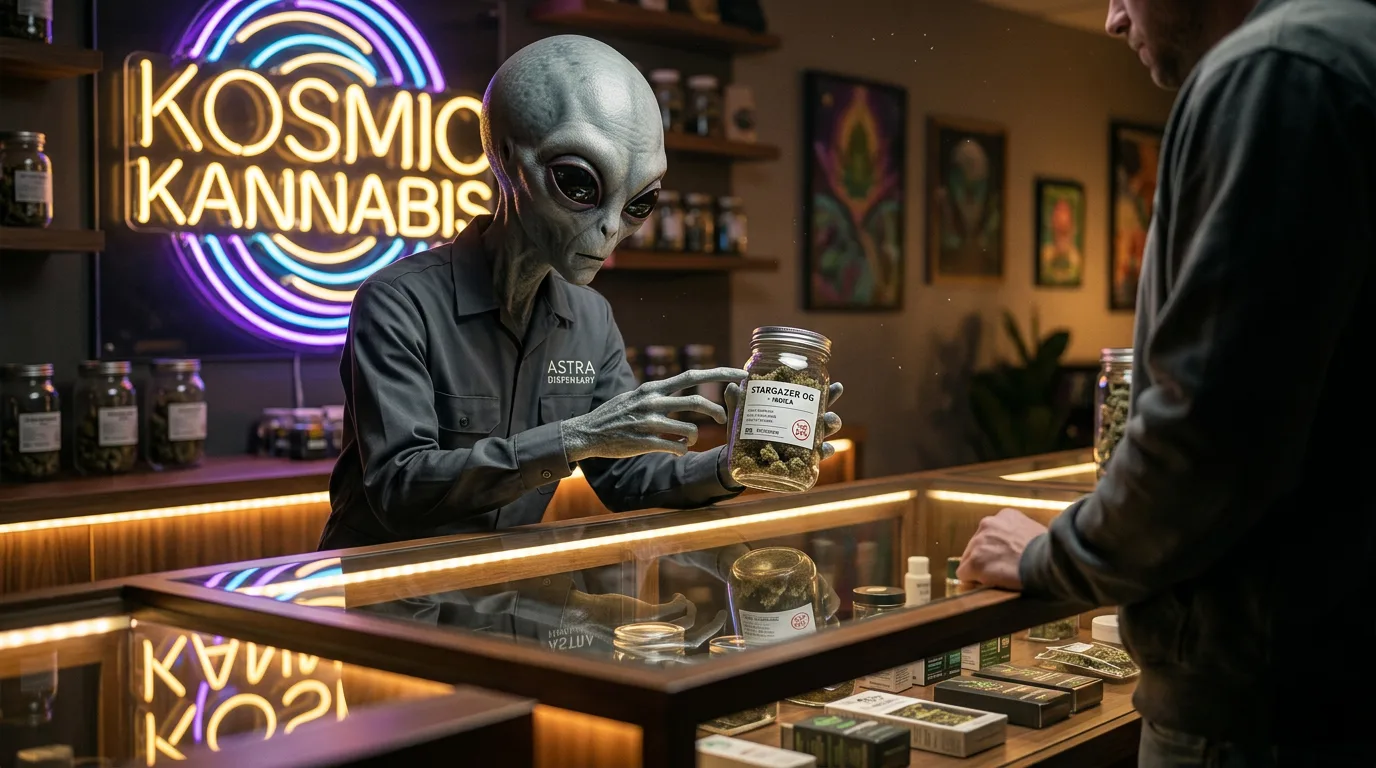
Cannabis SEO Agency: The Channel the Platforms Can’t Take Away From You
Cannabis is locked out of paid search, so the auction every other industry buys its way into simply doesn’t exist for you. Organic search, the map pack, and your reputation aren’t one channel among many here. They’re the entire front door, and we build it to win.
Cannabis SEO is a different discipline than general SEO because the usual escape hatch is bolted shut: Google bans cannabis ads, so there is no paid auction to lean on, and organic visibility is the durable channel rather than a nice-to-have.
Google’s ad policy prohibits marijuana ads outright and permits only LegitScript-certified, topical, hemp-derived CBD products at 0.3% THC or less, in just three regions: California, Colorado, and Puerto Rico. For a dispensary or a THC brand, that means the transactional money terms carry no functioning paid auction. You cannot buy your way to the top of “dispensary near me.” You have to earn it.
That single constraint reshapes the whole strategy. When competitors can’t outspend you in the auction, the edge moves to the things spending can’t shortcut: ranking in the local map pack, owning an indexable menu, building a Google review profile customers trust, and being the source an AI answer cites. This page lays out how we win each of those, and every number on it traces to a real source listed at the bottom.
The case for doing this differently is not our opinion. It is what the data says, every figure sourced below.
You can’t buy the ad, so you have to earn the rank.
Google’s recreational-drugs policy bans cannabis advertising and carves out only one narrow exception: LegitScript-certified, topical, hemp-derived CBD products with 0.3% THC or less, eligible to advertise in California, Colorado, and Puerto Rico alone. For a licensed dispensary or a THC product brand, that exception is effectively irrelevant. The paid lane is closed, and it isn’t reopening on any timeline you can plan around.
This is the cleanest argument for a cannabis-specialized SEO program, and it isn’t opinion. Industry analysis reports that organic search drives roughly 3x more long-term traffic than paid advertising, and in a market where paid is off the table entirely, that multiplier is your whole growth model. Around 60% of cannabis consumers begin their shopping journey with a search, so the question isn’t whether to invest in organic. It’s whether you’ll own that search or hand it to the dispensary down the street.
Most agencies treat SEO as a complement to a paid program. In cannabis it is the program. We build accordingly, with the budget and the technical work pointed at the channels that compound instead of the ones that reset to zero the day you stop paying.
Google bans cannabis ads. There is no auction to win, only a rank to earn, and organic compounds where paid cannot.
The map pack takes nearly half the clicks
The gap between rank #1 and rank #10 is a quarter-million dollars.
A 2026 study of 3,475 cannabis dispensaries across the 24 largest U.S. cities with legal recreational sales put a hard number on local ranking. The gap in estimated monthly traffic value between the #1 and the #10 dispensary in the map pack was $252,642. That is the monthly difference between owning your market’s search and merely appearing in it, and it is why map-pack position is the single most valuable lever in this niche.
The same study found most dispensaries are leaving that value on the table. 68% had no UTM tracking on the website link in their Google Business Profile, so they can’t even measure what the profile sends them, and 29 different primary categories were in use across profiles when only one is correct. These aren’t exotic problems. They’re basic local-SEO hygiene that competitors are getting wrong, which means the position is winnable for an operator who does the fundamentals right.
We run the dispensary and brand version of that fundamentals checklist, then build past it: the correct primary category, tracked profile links, structured location and product data, and the content that earns the rank rather than rents it.
What local ranking is worth, in dollars
Measured across 3,475 dispensaries in the 24 largest U.S. recreational markets.
Source: SearchLab Digital, Cannabis Dispensary SEO Study 2026Your menu is probably invisible to Google.
Here is a cannabis-specific trap most operators never see: the embedded menu from a marketplace like Weedmaps or Leafly is an iframe, and an iframe passes no SEO value to your site. Every product page, every strain name, every category your customers search for lives on someone else’s domain. Google can’t index it as yours, so the deepest, most commercially valuable content on your site is contributing nothing to your rankings.
Migrating to a fully indexable native menu is one of the highest-leverage technical fixes in the niche. Dispensaries that make the switch regularly see double-digit percentage growth in organic traffic within the first 60 to 90 days, because Google can finally read and rank the inventory customers are searching for. The audience makes the fix urgent: 82% of dispensary customers view websites on their phones, so the native menu has to be fast and mobile-first, not just indexable.
This is the kind of work a generalist agency tends to miss because it looks like a vendor integration rather than an SEO problem. We treat the menu as core indexable content, because in cannabis it is the content that converts.
Most dispensary customers browse on a phone
Iframe menus from marketplaces pass no SEO value; a native, indexable, mobile-first menu does.
Source: Spokes Digital, Cannabis Dispensary SEO 2026 GuideYour star rating decides the click before the customer walks in.
In local discovery, reviews are a near-universal filter. BrightLocal’s research finds 97% of consumers read reviews for local businesses, and 75% say they always or regularly read them. For a dispensary, that profile is the proof that gates the decision: 71% of consumers would not consider a business rated below three stars, so a thin or low rating screens you out before consideration, no matter how well you rank.
Google is where that battle is fought. It remains the most-used place consumers read reviews at 81%, well ahead of any other platform, which makes the Google Business Profile your priority reputation surface. Responding matters too, not as housekeeping but as a conversion lever: 80% of consumers say they’re likely to use a business that responds to all of its reviews. We treat reviews as an owned, ongoing engine, so your rating, volume, and response cadence keep pace with the dispensaries you compete against.
The reputation thresholds that screen you in or out
Be the source the AI answer cites, not the link beneath it.
Search itself is shifting under cannabis content. Pew Research found that when Google shows an AI summary, people click a traditional result about half as often: 8% of visits with a summary versus 15% without. Summaries appeared on 18% of searches in the study, and 58% of users saw at least one. Separately, 68% of U.S. Google searches ended without any click in early 2026. The informational traffic a cannabis blog post could once earn is being compressed at the top of the page.
AI answers are now mainstream, not fringe: 65% of U.S. adults at least sometimes encounter AI summaries in search, and 53% have at least some trust in them. So the goal is no longer just ranking a page; it’s being the entity the AI assembles its answer from and the brand it names. That is the AEO work: schema, clear entity signals, and pages structured to be quoted, not just crawled. In a zero-click world, presence inside the answer beats a tenth blue link no one sees.
AI answers are eating the click
And 68% of U.S. Google searches ended without any click in early 2026.
Source: Pew Research Center, AI summaries and clicks (2025)The lead you earned is wasted if you answer it slow.
Organic puts more inbound in front of you: delivery orders, medical-card inquiries, B2B and wholesale outreach. But the demand SEO creates is only as good as the follow-up behind it. The MIT lead-response study is blunt on this: calling a lead within 5 minutes versus 30 minutes improves the odds of qualifying it by 21x, and the odds of even contacting them by 100x. Slow follow-up quietly burns demand you already paid to create.
This matters more in cannabis than most niches because the channel that fills the funnel can’t be topped up with a quick ad buy. Every qualified inquiry is expensive to earn and easy to lose, so we pair the visibility we build with intake and response workflows that move in minutes, not hours. The cheapest case you’ll ever sign is the one already raising its hand. The underlying market keeps that work worthwhile: BDSA forecasts global legal cannabis sales rising toward $58 billion by 2028, so the demand pool you’re competing for keeps expanding.
Five minutes versus thirty changes everything
MIT lead-response study: contact a web lead in 5 minutes, not 30.
Source: MIT Lead Response Management Study (Oldroyd)Search catches people at the moment they’re ready to buy.
Tyler Jacobson, Director of Marketing at Hybrid Marketing Co.
There’s not much point in fighting back by simply getting better at SEO. Our advice is to invest in zero-click marketing: earning influence and growing your brand’s awareness without requiring a visit to your website.
Rand Fishkin, Co-founder and CEO, SparkToro
Reviews are stable, sticky, and more important than ever.
Myles Anderson, Co-founder and CEO, BrightLocal
Frequently asked
Can a cannabis business run Google or Meta ads instead of doing SEO?
How much is local ranking really worth for a dispensary?
Why does my Weedmaps or Leafly menu hurt my SEO?
Are online reviews that important for cannabis retail?
How does AI search change cannabis SEO?
Does fast follow-up really change results that much?
Ready to win the search competitors can’t buy their way into?
In cannabis, organic search, the map pack, and your reputation aren’t a marketing tactic. They’re the acquisition channel, because the paid one is closed by policy. We build the technical foundation, the local presence, the review engine, and the AI-ready content that turn high-intent “near me” demand into orders you keep.
Let’s map where you rank today, where the gap is, and what it’s worth to close it.
Every figure on this page comes from a primary platform, an independent study, or a named industry source. No competing-agency stats, no made-up numbers.
- Google Ads Help, Recreational drugs policy
- SearchLab Digital, Cannabis Dispensary SEO Study 2026
- Spokes Digital, Cannabis Dispensary SEO 2026 Guide
- BrightLocal Local Consumer Review Survey
- Pew Research Center, AI summaries and clicks (2025)
- Pew Research Center, Americans and AI summaries (2025)
- SparkToro, less than one third of Google searches send a click (2026)
- MIT Lead Response Management Study (Oldroyd)
- BDSA, global legal cannabis sales forecast to $58 billion in 2028