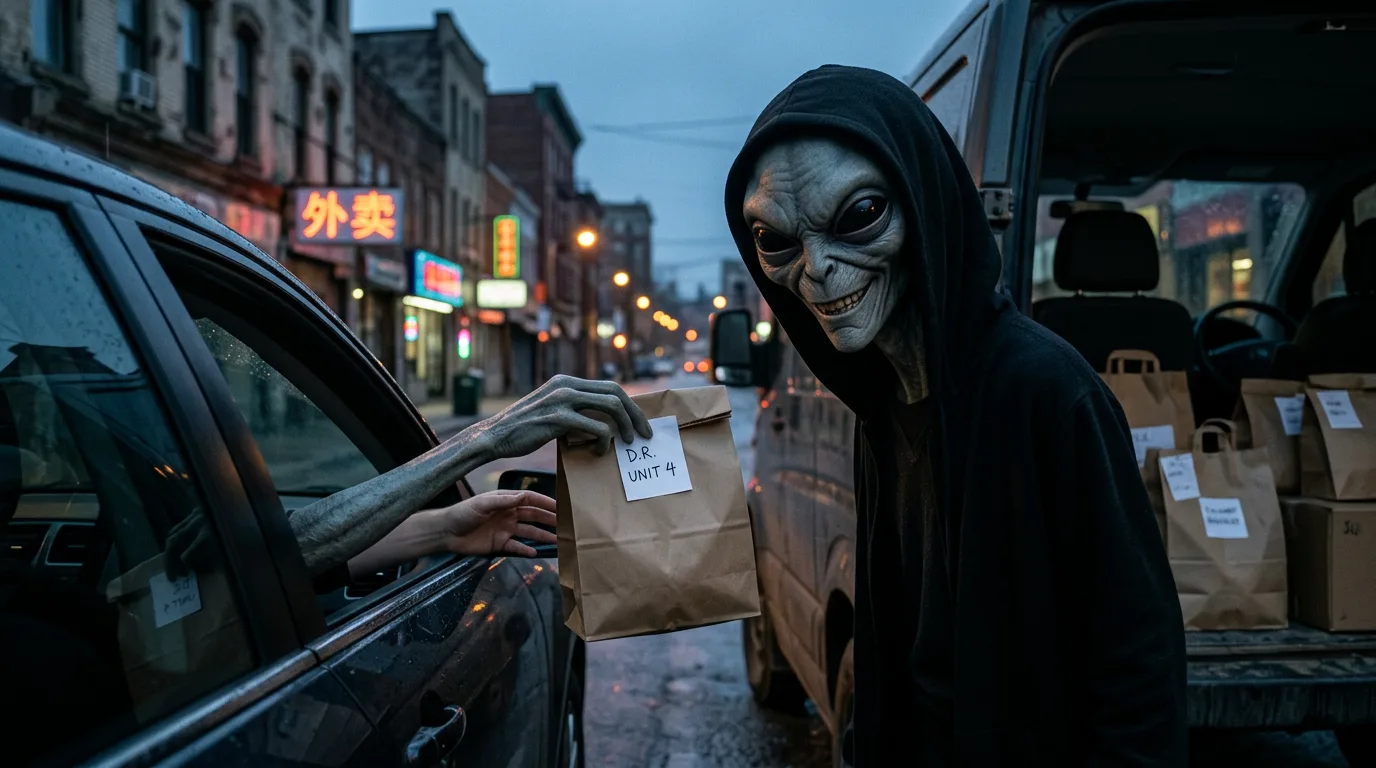
Cannabis Delivery Marketing: Win the Radius, Own the Reorder
Cannabis delivery is a two-part play: get found inside the small radius you can legally serve, then turn that first order into a standing one. There is no paid auction to buy your way in, so the demand has to be earned in the map pack, the answer, and the reorder.
Delivery marketing is its own discipline because the channel is the most profitable order you can take and the one customers now expect by default, yet the usual shortcut, paid search, is closed. You win by owning the local discovery surfaces and engineering the second purchase, not by outbidding anyone.
A cannabis delivery customer is not browsing. They want product brought to a specific address inside a defined zone, and they are choosing among the handful of operators who can legally reach them. The decision happens in the “near me” results, the Google Business Profile, and increasingly the AI answer, before anyone sees a menu. That is where the order is won or lost.
This is why a generic cannabis approach underperforms for delivery. Google and the major engines prohibit cannabis ads, so the money terms carry no functioning paid auction (CPC returns null on “dispensary near me,” “cannabis dispensary near me,” “recreational dispensary near me,” and “weed delivery near me”). Organic, the map pack, and reputation are the acquisition channel, and the economics only work if the first delivery becomes a repeat one. Every number on this page carries a real source, listed at the bottom.
The case for doing this differently is not our opinion. It is what the data says, every figure sourced below.
You can’t buy the click here, so you have to earn it.
The defining fact of cannabis marketing is that the auction is closed. Google and the major engines prohibit cannabis ads, and it shows in the data: cost-per-click returns null on “dispensary near me,” “cannabis dispensary near me,” “recreational dispensary near me,” and “weed delivery near me.” There is no paid lane to the high-intent delivery customer, which means the operators who win do it through organic visibility, the map pack, and reputation. That is not a tactic; it is the entire acquisition model for this niche.
The demand is large and durable. “Dispensary near me” pulls 1,580,000 US searches a month and has held in the rough 1.4M to 2.2M range every month for years, peaking at 2,208,000 in July 2023. That sustained “near me” intent always surfaces a local pack, so map-pack visibility is the primary lever. For a generalist competitor, this is the hardest thing to argue against: the channel a normal business buys its way into simply does not exist here, and the work shifts entirely to being the result Google and the answer layer choose.
There is no paid auction on the cannabis money terms. Organic, the map pack, and reputation are the acquisition channel, not a supplement to it.
What it costs to bid your way in
CPC returns null on “dispensary near me,” “cannabis dispensary near me,” “recreational dispensary near me,” and “weed delivery near me.”
Source: Ahrefs Keywords Explorer (US)Delivery demand is real, and the local terms are winnable.
The delivery intent has its own search footprint. “Weed delivery near me” pulls 12,000 US searches a month, “weed delivery” 20,000 (KD 31), and “cannabis delivery” 12,000. The opening for a focused operator is in the longer-tail local terms: “dispensary delivery near me” shows just KD 10, a low-difficulty entry point into exactly the queries that convert. These are buyers with an address and an order in mind, not researchers.
Because there is no paid placement, the radius is won on the organic and map surfaces: a complete, accurate Google Business Profile, delivery-zone clarity, local content, and the reviews that gate the click. We build the program around the terms you can rank for inside your legal service area rather than chasing national volume you can’t fulfill. The goal is to own the small set of high-intent queries that map to an address you can deliver to today.
The delivery intent worth owning
The delivery order is the most valuable one you take.
Online ordering, which includes delivery and curbside, is now nearly a quarter of dispensary sales, and it is the order you want. Flowhub’s data shows the average online order runs 35% higher than a walk-in: $68.01 versus $50.56. The baskets are bigger too, 3.9 items per online order against 2.7 for walk-ins, a 44% increase. The customer who orders for delivery spends more and buys more in a single transaction.
That is the economic case for owning the channel rather than treating it as a convenience. When the most profitable order is also the one that requires being found in a closed-auction environment, the marketing has to point directly at it. We aim the program at delivery and online intent specifically, because a dollar of visibility that lands a delivery order returns more than the same dollar landing a walk-in.
The online order is worth $68.01 against $50.56 in-store, and carries 44% more items. Owning delivery is owning the higher-value basket.
Online order vs walk-in
Delivery and reordering are now table stakes, not perks.
The demand side confirms the channel is no longer optional. In Sweed’s 2025 Cannabis Retail Survey (955 nationally representative adults 21+, October 2025, margin of error plus or minus 3.2%), 67% of cannabis shoppers said delivery options are essential. The convenience is no longer a differentiator you offer; it is a baseline the customer screens for before they choose where to order.
The same survey points straight at the reorder mechanic. 75% of shoppers want the ability to reorder with one click and 72% want to pre-order online. Most strikingly, 86% said they would return to the same dispensary if it offered personalized recommendations. That is the whole “own the reorder” thesis in the customer’s own words: convenience gets the first order, and a frictionless, personalized second order is what they say keeps them.
The reorder is what they’re asking for
The repeat buyer is where delivery economics compound.
A single delivery order is a thin margin once you account for routing and acquisition. The return is in the second, fifth, and twentieth order. Flowhub’s data puts hard numbers on it: cannabis loyalty members spend 3.5 times more each year than one-time buyers, visit 40% more often, and are five times more likely to try new products. The captured, returning delivery customer is the asset; the first order is just the cost of acquiring it.
Speed is the hinge between a first order and a relationship. On inbound leads, the odds of qualifying collapse fast: calling in five minutes versus thirty drops the odds of qualifying 21 times. Slow follow-up on a delivery inquiry, a pre-order question, or a first-time customer quietly burns the demand the marketing already worked to create. We build the program so the first order is easy to place and the reorder is easier still: tracked intake, fast response, and the one-click, personalized repeat experience customers say earns their return.
Loyalty members spend 3.5x more a year and visit 40% more often. The reorder, not the first order, is where delivery makes money.
What a captured reorder is worth
And on inbound leads, the odds of qualifying drop 21x between a 5-minute and a 30-minute response.
Source: FlowhubReputation gates the click, and AI now sits above it.
With no paid lane, the review profile does the work the ad would. 97% of consumers read reviews for local businesses, 71% will not consider a business rated below three stars, and 80% say they are likely to use a business that responds to all of its reviews. Google is where that battle is fought, with 81% of consumers using it to read reviews. For a delivery operator chosen sight-unseen from a results page, the star rating and review depth are the proof, and the Google Business Profile is the priority surface.
The surface above the reviews is shifting too. When Google shows an AI summary, users click a result roughly half as often (8% of visits versus 15% without one), and 65% of US adults now at least sometimes encounter these summaries. With 68.01% of US searches already ending without a click, visibility inside the results page, the map pack, the profile, the cited answer, matters more than raw ranking. We build the delivery program to be the named, reviewed source the answer reaches for, not just a link beneath it.
Reputation is the filter before the order
67% say delivery options are essential, 75% want the ability to reorder with one click, and 86% of cannabis customers would return to the same dispensary if there were personalized recommendations.
Sweed 2025 Cannabis Retail Survey (n=955, October 2025)
Green Wednesday is one of the biggest retail moments of the year for cannabis, and the insights from our survey make it clear: Retailers who use smarter digital tools and know how to run effective promotions stand to gain the most.
Rocco del Priore, Co-Founder, Sweed
Much as it pains me to say, there’s not much point (nor any hope) of fighting back by simply getting better at SEO. Our belief and advice is to invest in Zero Click Marketing: earning influence and growing your brand’s awareness without requiring a visit to your website.
Rand Fishkin, Co-founder and CEO, SparkToro
Frequently asked
Why can’t I just run Google Ads for my cannabis delivery business?
How much search demand is there for cannabis delivery?
Why focus marketing on delivery instead of in-store?
What does “own the reorder” mean for my business?
How important are reviews if I run delivery?
Does AI search change how I get found for delivery?
Ready to own your delivery radius and the reorder behind it?
Tell us your service area, your menu, and where orders are leaking, and we’ll show you exactly where the demand is inside the zone you can legally reach and how we’d capture it without a paid auction. Senior people, transparent pricing, and a program built around the higher-value online order and the repeat customer behind it.
Every figure on this page comes from a primary platform, an independent study, or a named industry source. No competing-agency stats, no made-up numbers.
- Ahrefs Keywords Explorer (US): delivery volume, difficulty, and null CPC
- Flowhub: cannabis industry statistics (online AOV, cart size, loyalty)
- Sweed 2025 Cannabis Retail Survey (delivery essential, one-click reorder, personalized recs)
- BrightLocal Local Consumer Review Survey (reviews, star bar, response, Google)
- BrightLocal Local Consumer Review Survey 2024 (Google share of review reading)
- Pew Research Center: clicks when an AI summary appears (2025)
- Pew Research Center: how Americans feel about AI summaries (2025)
- SparkToro: zero-click search in 2026 (Rand Fishkin)
- Lead Response Management Study (Dr. James Oldroyd, MIT / InsideSales)