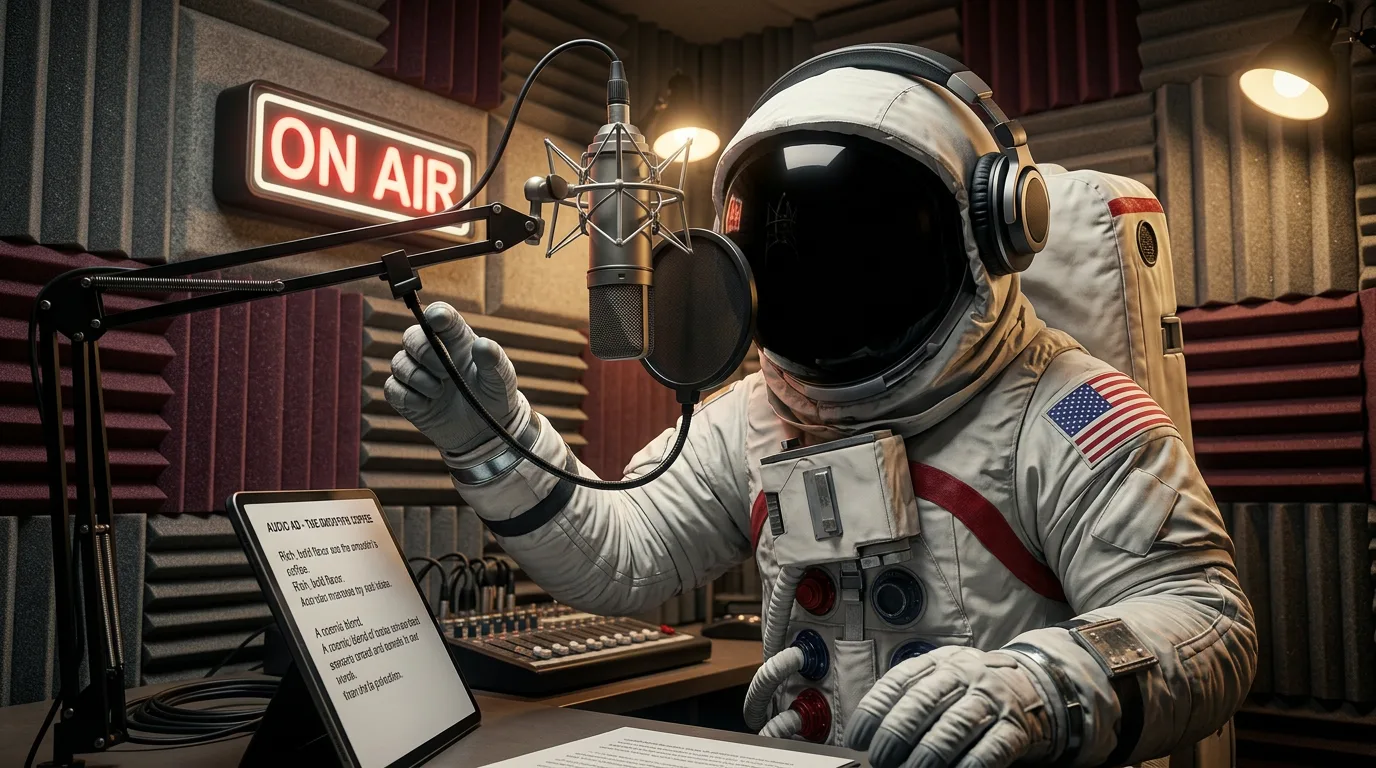
Here is how Spotify advertising works: your brand goes inside the headphones of 600M+ listeners while they cook, commute, work out, and zone in. You buy ad space through Spotify Ads Manager, choose a format (audio, video, podcast, or display), target by demographics, listening context, and mood, then run it on an auction starting at $250. It is an ear-first channel: you build demand before the search, not capture the click after it.
That last line is the whole point, so let us explain the channel instead of selling you a fantasy where someone hears your jingle in the gym and frantically pulls out their phone to buy. That is not how audio works. Here is how it works.
What Spotify advertising is
Spotify is the largest streaming-audio platform on earth, and a big chunk of its listening happens on the free, ad-supported tier. Those listeners pay with their attention instead of a subscription, and that attention is what you are buying. Unlike a banner ad competing with forty other things on a screen, a Spotify audio ad runs in a moment where the listener has chosen sound as their main activity. Their eyes might be on a treadmill or a steering wheel, but their ears are yours.
You run campaigns through Spotify Ads Manager (the self-serve platform). You set a budget, pick a format, define who you want to reach, upload or build your creative, and Spotify serves your ad to matching listeners on an auction. You can launch with a daily or lifetime budget and adjust as you go. No enterprise minimum, no "call our sales team," no insertion order the size of a mortgage application. In that respect it behaves like the rest of the programmatic advertising world: inventory bought through software, priced on an auction, served to the right person in the right moment.
The ad formats, in plain English
Spotify is not one ad unit. It is a small menu, and choosing the right one matters more than most businesses realize.
Audio ads
The core format. A 15 to 30 second spot that plays between songs on the free tier, paired with a clickable companion banner. The screen may be dark, so the audio has to carry the whole message. This is the workhorse: cheap to produce, broad to reach, and the format Spotify's whole ad business was built on. Pricing runs on a CPM (cost per thousand impressions) basis, typically landing roughly in the $15 to $35 range depending on targeting (always validate current rates, audio pricing moves).
Video ads
A video spot that serves when the listener is actively looking at their screen, plus formats like Video Takeover with a clickable banner and call to action. Because video only fires during an active viewing session, available inventory is smaller, which is why per-impression CPMs often run a touch lower than audio. Run video when you genuinely need the visual; do not pay for pixels nobody is looking at.
Podcast ads (Spotify Audience Network)
Ads inserted into Spotify's podcast inventory, including dynamically inserted spots and, on some shows, host-read placements. Podcast audio carries more trust than between-song spots because the listener is leaned in and the host's voice does some of the lifting. It is a different buy from streaming-music audio, and we wrote a whole comparison on it: Spotify ads vs podcast ads.
Display and newer formats
Overlays, home-page banners, and mobile leaderboards that ride alongside the audio. In 2026 Spotify also rolled out formats like Carousel ads (multiple swipeable cards, each with its own image and link), expanding what a "Spotify ad" can be beyond a single spot. The menu keeps growing; the strategy underneath it does not change.
Targeting: how Spotify advertising works under the hood
This is where Spotify earns its keep, and it is genuinely different from Google or Meta. You can target the usual way (age, gender, location, language, device), but the channel's real edge is listening context and mood.
Spotify knows whether someone is in a "Focus" playlist grinding through work, a "Workout" playlist mid-set, a "Chill" playlist winding down, or a commute playlist on the drive home. That is contextual targeting at its purest: you align your message to the moment instead of just the demographic. A meal-kit brand reaching the dinner-prep cooking context, or a productivity tool reaching the focus context, will out-perform the same spend sprayed at "adults 25 to 44." Context beats demographics on this platform more often than not. Genre and playlist targeting are also available: you can reach listeners by the music category they favor or by specific playlists whose audience composition matches your buyer, so taste signals work alongside moment signals. You can also layer interest segments and retarget where available.
One control worth setting on purpose: frequency capping. Audio rewards repetition, but there is a line between "I keep hearing that name" and "I am sick of that name." Caps let you hit enough repeats to register without burning goodwill, which matters more on a channel people listen to for hours at a stretch.
The creative: what makes an audio spot land
Targeting puts you in the right ear. Creative decides whether anything sticks, and audio is unforgiving here because the screen is usually dark. A few things separate a spot that registers from one that gets tuned out:
- Say the brand name early and again at the end. No logo is doing the work for you. The name is the asset, so it has to be heard, not glanced at.
- One idea, not five. Fifteen to thirty seconds is room for a single clear message and a single action. Cram in three offers and the listener keeps none.
- Write for the moment you targeted. A spot built for the workout context should not sound like a spot built for the commute. The whole point of context targeting evaporates if the creative ignores it.
- Give the ear something to hang the name on. A consistent voice, a short sonic cue, a line worth repeating. Repetition only compounds if there is something memorable to repeat.
This is the difference between buying impressions and buying recall. The media gets you heard; the creative is what gets you remembered.
The honest part: Spotify is an assist channel
Here is the truth most agencies skip because it is inconvenient. Audio is upper-funnel. It builds demand and awareness; it rarely closes the sale on its own. People do not hear your audio ad and immediately pull over to convert. They hear it three times over two weeks, your name lands, and later they search you by name, click your retargeting ad, or recall your brand when the need shows up.
We call it the Gretzky pass: you skate to where the puck is going, not where it is. Spotify gets your name into a buyer's head before they ever type a query, so when they do, you are already familiar instead of a cold stranger. That is real, valuable work. It is just not last-click work, and anyone who promises you a clean cost-per-conversion straight off a Spotify audio buy is either confused or selling.
So how do you measure it honestly? The signals that matter for audio:
- Branded search lift. Did searches for your name climb during and after the flight? This is the cleanest demand signal audio gives you.
- Listen-through rate. Did people hear the whole spot, or skip the second it played?
- Direct and retargeting traffic. New direct visits and warmer retargeting pools moving in lockstep with the campaign.
- Brand-study metrics (ad recall, awareness lift) on larger buys, where Spotify's own measurement applies.
- Assisted conversions, not last-touch, in your attribution model.
The cleanest version of this question is incrementality: would those conversions have happened anyway, or did the audio move them? That is the lens to judge audio by. If you judge Spotify by last-click ROAS alone, it will look like it failed, every time, on every platform. That is a measurement error, not a channel failure. Judge the channel by the job it is doing.
Who Spotify advertising is right for
Spotify earns its spot in the mix when:
- You have a brand worth knowing, not just a one-time transactional offer, and you want top-of-funnel demand that feeds your search and social.
- You are running other channels already (Google, Meta, retargeting) that can catch the demand audio creates. Audio alone, with nothing downstream, leaks.
- Your audience streams (most consumer audiences now do) and you can describe the moment they listen.
- You can commit to a real flight, not a one-week dabble. Audio works on frequency and repetition; a tiny one-and-done buy is how you waste $250.
That last point is the one people get wrong most, so here is the math in plain terms. Brand recall needs repeats, not a single exposure. If your whole budget buys each listener one impression, you have spent money to be forgotten by lunch. A flight that reaches fewer people more often will almost always beat one that reaches everyone once. Decide on reasonable frequency first, then size the audience and budget to support it, not the other way around.
It is a weaker fit if you need provable last-click ROI this week with no patience for demand-building, or if your downstream funnel cannot catch the warm audience audio sends its way. Audio is the demand-builder; the search, social, and retargeting layers are the catchers. Run it next to a channel like CTV advertising for small business and you have eyes and ears working the same audience, but neither one is built to close on its own.
What it costs
Spotify self-serve starts at a $250 minimum per campaign through Ads Manager, with audio CPMs commonly in the $15 to $35 range and video sometimes lower per impression. Those are useful planning numbers, not a quote, and rates shift with targeting and inventory. For how we price the management on top of media (no markup on your spend, ever), see our transparent breakdown at Spotify and audio pricing.
Want the full playbook?
This post is the business-owner's version. For the complete strategic walkthrough (formats, targeting, creative, and how audio slots into the bigger plan), read the pillar: the complete guide to Spotify advertising. And if you want a senior person to build and run it, that lives here: our audio and Spotify advertising service.
Ready to be heard?
Most businesses treat Spotify as a "maybe someday" channel because nobody explained how the assist works. Now you know. If you want senior people who will build it right, point it at the right moment, and measure it honestly (no fairy-tale last-click ROAS, just the real demand it creates), that is exactly what our programmatic advertising team does.
Build your number on the pricing page, then book 30 minutes or email us at admin@moonsauceagency.com. No pressure, just a real conversation, just real talk about whether audio belongs in your mix.
Sources for the platform facts above: Spotify Ads pricing, Spotify Ads Manager overview, Spotify newsroom: 2026 advertising tools and formats. Pricing and minimums change; validate current rates before you commit.